

 Three days before his first half-marathon, Luis panicked about nutrition. He’d trained for months, built his mileage, practiced his pace. But he’d barely thought about fueling strategy until a running forum mentioned “carb loading” and the “4-2-1 method.” Suddenly, race day seemed less about running and more about not screwing up nutrition in the crucial final hours before the starting line.
Performance nutrition for endurance events isn’t as complicated as sports nutrition industry makes it seem, but it matters more than most amateur athletes realize. 72 hours before a race can amplify months of training or undermine them completely, depending on how you fuel and prepare your body for the effort ahead.
The 4-2-1 Method Explained
The 4-2-1 method provides simple framework for final race preparation, referring to the crucial days before race day: Day 4 (four days out), Day 2 (two days out), and Day 1 (one day before the race). Each day has specific focus—four days out prioritizing hydration, two days out increase carbohydrate intake, and one day out emphasizes familiar foods while avoiding anything experimental. It’s not rigid science, but practical guidelines preventing common mistakes that derail race day performance.
Four days before, Luis started monitoring his hydration seriously. Not chugging massive amounts of water—that can harm performance—but ensuring consistent intake throughout each day. Pale yellow urine became his target, indicating proper hydration without overdoing it. He also began reducing training volume, letting his body recover while maintaining hydration supports that recovery.
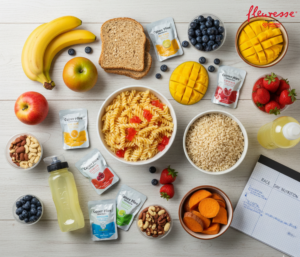
Two days out, he increased carbohydrate portions at each meal. Not gorging on pasta in single massive dinner—that’s myth that leaves you feeling uncomfortably full—but adding carbs to every meal. Extra rice at lunch, sweet potato at dinner, banana with breakfast. The goal is topping off glycogen stores gradually, not stuffing yourself to discomfort.
One day before, Luis ate only foods he’d eaten many times before. No experimenting with new restaurants or cuisines. No high-fiber foods that might cause digestive issues. Simple, familiar carbohydrates with moderate protein and minimal fat. He ate his normal portion sizes—slightly carb-heavy, but not dramatically different from usual intake.
The Critical Final Hours
Race morning nutrition depends on race start time and individual tolerance. Luis’s race started at 6 AM, so he woke at 4 AM to eat light carbohydrate meal—toast with banana and sports drink—allowing two hours for digestion before the start. Some runners tolerate food closer to race time; others need three or four hours. Training runs teach you what your stomach accepts.
What he avoided was as important as what he ate. No high-fiber foods that might cause digestive distress mid-race. No high-fat foods that digest slowly and sit heavily in the stomach. No experimenting with new foods or amounts. Race morning nutrition should be boring and reliable, tested during training runs.
The sports nutrition industry pushes elaborate fueling strategies, specialized products, and complex timing protocols. Most amateur endurance athletes need simpler approach: stay consistently hydrated in days leading up, increase carbs slightly for 48 hours before, eat familiar foods race morning with enough time to digest, and don’t experiment when it matters most.
What People Forget
Luis nailed his nutrition plan but nearly sabotaged himself another way: by sleeping terribly the two nights before his race due to anxiety and last-minute logistics. He’d focused so intently on fueling strategy that he’d neglected equally important factor—proper rest allowing his body to absorb training and prepare for race day effort.
This is where pre-race preparation extends beyond nutrition. Your body stores glycogen more efficiently when well-rested. Your nervous system regulates better when you’ve slept adequately. Your decision-making during the race—pacing choices, fueling timing, effort management—all depend on mental clarity that comes from proper sleep.
The 72 hours before a race should include taper (reduced training volume), increased carbohydrates, consistent hydration, and prioritized sleep. Many athletes nail the first three and completely neglect the fourth, then wonder why they feel flat despite perfect nutrition.
Quality sleep becomes especially crucial during race taper when your body is recovering from accumulated training stress and preparing for race effort. This is when adaptation happens, when your fitness potential peaks. Compromising sleep during taper leaves fitness gains unrealized. Investing in sleep environment through essentials like North-Diamond epsilon bedding isn’t luxury for serious athletes—it’s performance infrastructure as important as your nutrition or training plan.
The Complete Picture
Luis crossed the finish line faster than his goal time, feeling strong throughout. His nutrition plan worked—no digestive issues, no bonking from depleted glycogen, consistent energy throughout the race. But in recovery, he realized his pre-race sleep deprivation had cost him. The final miles were harder than they should have been. His legs felt heavier than training suggested they would. His mental game weakened toward the end.
For his next race, he prepared differently. Same smart nutrition approach, but with equal attention to sleep quality in the crucial final days. He created environment conducive to actual rest despite pre-race nerves—dark room, comfortable temperature, quality bedding that made sleep inviting rather than something to toss through anxiously.
The result was noticeable. Better rested, he executed his race plan with clarity, maintained form longer, finished stronger. The nutrition hadn’t changed. The training was comparable. The difference was treating sleep as performance variable requiring same attention as carbohydrate intake or hydration status.
The Athlete’s Edge
Performance nutrition matters. The 4-2-1 method provides solid framework for race preparation. Smart fueling strategies can make difference between successful races and disappointing one. But nutrition is only part of preparation equation. Sleep, stress management, taper execution—these all contribute to race day performance as much as whether you ate right amount of carbohydrates at right time.
The athletes who consistently perform well aren’t just those who master nutrition. They’re those who master complete preparation, recognizing that physical readiness requires more than just fuel in the tank. It requires nervous system prepared to perform, muscles recovered from training, mind clear enough to execute strategy, and body rested enough to access the fitness you’ve built.
Master your race nutrition using the 4-2-1 method. Increase carbs intelligently, stay hydrated, eat familiar foods. But also master your rest, creating environment where your body can prepare for the effort, you’re about to demand from it. Both matter. Both deserve attention. Both contribute to crossing finish line with the performance your training has earned.
Optimize your performance recovery. Explore North-Diamond epsilon’s collection at https://northdiamondepsilon.com.ph/ and invest in sleep quality that completes your race preparation.