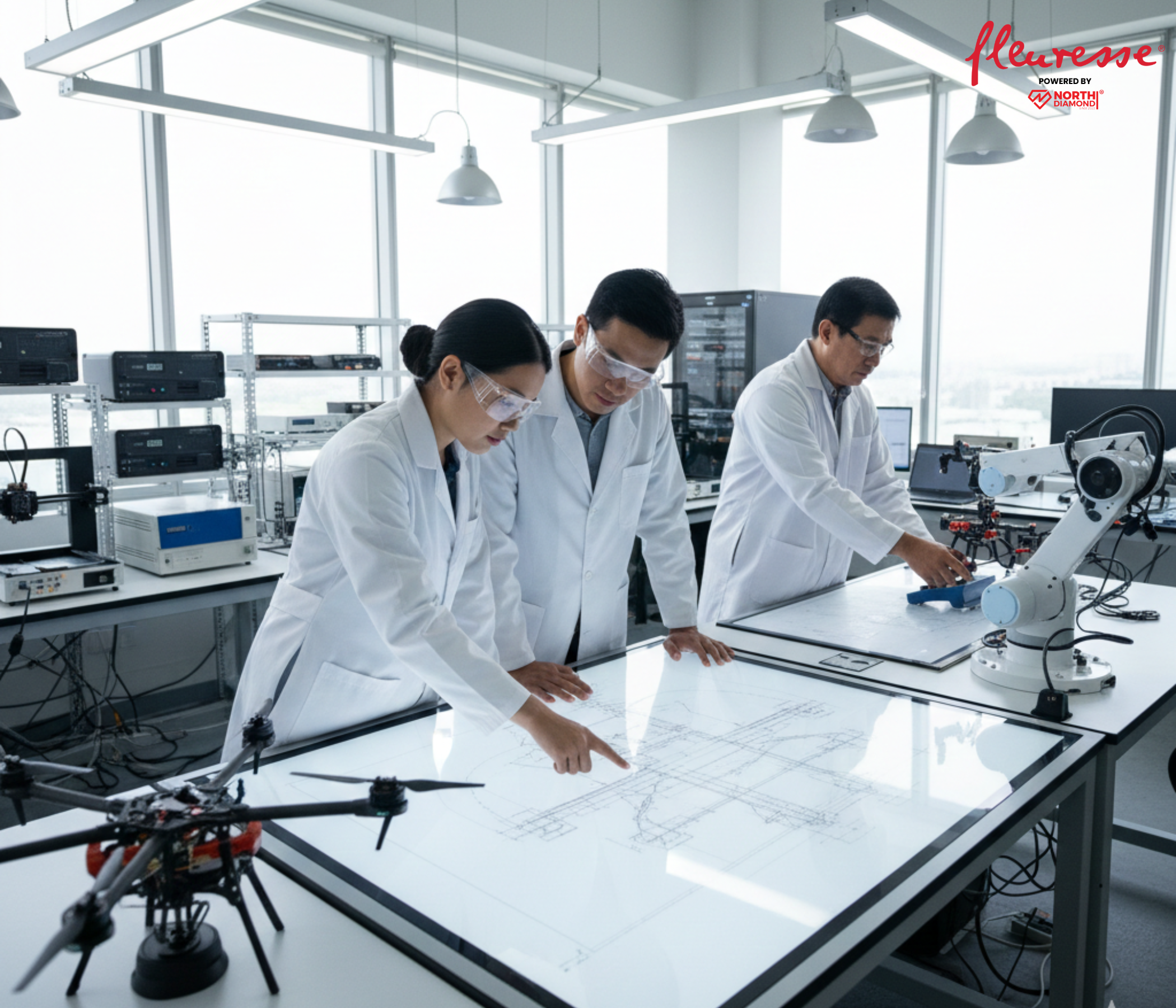

 Dr. Santos walks through the Philippine Science Heritage Center, watching school children marvel at exhibits about Filipino scientists whose names they’ve never heard in their regular textbooks. She sees their surprise when they learn that a Filipino co-invented the fluorescent lamp, that Filipino engineers helped design computer technology that powers their phones, that Filipinos have contributed significantly to global science despite decades of underfunding and brain drain.
This gap between Filipino scientific achievement and Filipino awareness of that achievement isn’t just an educational problem—it’s a national issue that affects how we see ourselves within ASEAN and on the global stage.
The ASEAN Science and Technology Landscape
The Association of Southeast Asian Nations has made science and technology a priority for regional development, recognizing that economic competitiveness in the modern world requires strong STEM capabilities. Singapore invests heavily in research and development, positioning itself as a regional biotech hub. Malaysia drives forward with aerospace and advanced manufacturing. Thailand focuses on agricultural technology and food innovation. Vietnam is rapidly expanding its tech sector and semiconductor industry.
And the Philippines? We have talent, creativity, and human capital. What we’ve lacked consistently is the investment, infrastructure, and perhaps most critically, the national conviction that science and technology should be central to our development strategy rather than peripheral to it.
Filipino Scientific Achievement Hidden in Plain Sight
The irony is that Filipinos have been contributing to global science and technology for generations, just not always from the Philippines. Filipino engineers, scientists, and researchers work at NASA, in Silicon Valley tech giants, in pharmaceutical companies developing life-saving drugs, in universities advancing human knowledge. The Filipino diaspora includes some of the world’s most accomplished scientists.
But ask most Filipinos to name a Filipino scientist, and they struggle beyond Fe del Mundo or maybe Eduardo Quisumbing if they paid attention in school. The average Filipino doesn’t know that Dado Banatao’s work enabled personal computing, that Filipino researchers are making breakthroughs in tropical disease treatments, that Filipino engineers are contributing to renewable energy innovations globally.
This knowledge gap matters because you can’t aspire to what you can’t imagine. When Filipino children don’t see science and technology as Filipino achievements, they don’t envision themselves as potential scientists or engineers. The talent pipeline remains constricted not by ability but by awareness and encouragement.
The ASEAN Context Comparison
Within ASEAN, the Philippines often positions itself as the region’s source of English-speaking service workers—BPO employees, nurses, domestic workers. These are valuable contributions, but they represent only a fraction of Filipino potential. Meanwhile, our ASEAN neighbors are building reputations as innovation hubs, manufacturing centers, and technology leaders.
This isn’t about disparaging service work, which employs millions of Filipinos and supports countless families. It’s about recognizing that a country’s economic development requires diversification into higher-value sectors, and that requires strong science and technology capabilities that are understood, valued, and invested in by society at large.
Singapore’s success isn’t just about government investment in R&D—it’s about a society that values scientific thinking, supports STEM education comprehensively, and sees innovation as central to national identity. Thailand’s agricultural technology advances come from systematic investment and cultural appreciation for applying science to traditional industries. Vietnam’s tech sector growth reflects national commitment to building technological capabilities.
The Philippines has the human capital to compete with any ASEAN nation in science and technology. What we need is the national awareness that makes science and technology a priority rather than an afterthought.
From Awareness to Application
Science and technology awareness isn’t just about knowing facts—it’s about understanding how scientific thinking and technological innovation apply to everyday life and business. It’s recognizing that quality isn’t accidental but results from applying scientific principles to materials, processes, and standards.
At North Diamond Epsilon, we apply this understanding to something as everyday as bedding. Our premium Fleuresse bed linens aren’t just aesthetically designed—they’re engineered using textile science that considers fiber properties, weave structures, and how materials perform in tropical conditions. The European manufacturing standards we source from represent centuries of materials science applied to creating textiles that genuinely perform better, last longer, and provide measurably superior comfort.
Our bamboo charcoal air purifiers aren’t traditional products given modern packaging—they represent applied chemistry and materials science. The porous structure of activated bamboo charcoal creates surface area that captures airborne particles and odors through adsorption, a scientifically understood process that makes these purifiers effective rather than merely decorative.
This represents what science and technology awareness looks like in practice: understanding that quality products are the result of applied knowledge, that performance claims should be based on scientific principles, and that Filipino consumers deserve access to products developed using rigorous scientific and technological processes.
Building Scientific Literacy
Raising science and technology awareness in the Philippines requires action at multiple levels. Government must increase R&D funding beyond the current negligible percentage of GDP. Universities need to strengthen STEM programs and research capabilities. Media should highlight Filipino scientific achievements with the same enthusiasm given to entertainment personalities. Businesses should invest in research, development, and innovation rather than only importing foreign technologies.
But it also requires individuals to recognize that scientific literacy matters in their daily lives. Understanding why materials science produces better fabrics. Knowing how air purification works. Appreciating that quality manufacturing involves process control and testing. Recognizing that Filipino businesses committed to quality are applying technological principles even in seemingly simple products.
When Filipino consumers demand quality backed by science rather than just marketing claims, when we ask how things work rather than just accepting what we’re told, when we support businesses that invest in proper materials and processes rather than just choosing cheapest options—we’re participating in building a culture that values science and technology.
The ASEAN Chairmanship Opportunity
As the Philippines assumes the ASEAN Chairmanship in 2026, we have an opportunity to highlight Filipino contributions to regional science and technology development. We can showcase Filipino innovations, support regional STEM education initiatives, and position the Philippines as a serious player in ASEAN’s technological future.
But this credibility requires that our own society values science and technology enough to invest in it, to celebrate it, to build businesses and industries around it. When we host international delegates and they examine Filipino products and services, they should see evidence that we take quality, innovation, and technological capability seriously.
At North Diamond Epsilon, we’re committed to this vision—offering products that represent scientific and technological rigor in their development, demonstrating that Filipino businesses can meet international quality standards, and helping build a market that values genuine quality over cheap imitation.
From Awareness to National Identity
The Philippines’ role in ASEAN science and technology shouldn’t be limited to providing graduates who excel once they leave the country. It should include building a society where scientific achievement is celebrated, where technological innovation is supported, where research and development are funded adequately, and where quality products and services are valued and demanded.
Dr. Santos watches the schoolchildren leave the heritage center excited about Filipino scientists they’d never heard of before. This is where change starts—with awareness that grows into appreciation, that develops into aspiration, that matures into achievement.
Science and technology awareness isn’t about everyone becoming scientists. It’s about everyone understanding that science and technology matter, that they’re not foreign concepts incompatible with Filipino culture, and that our future prosperity depends on embracing them as thoroughly as our ASEAN neighbors already have.
The Philippines has the talent. Now we need national awareness, investment, and commitment to compete with our neighbors not just in service sectors but in innovation, in research, in developing products and technologies that improve lives and build prosperity.
That future starts with awareness. It grows through application. And it’s built by everyone—government, business, and individuals—recognizing that science and technology aren’t optional additions to national development. They’re the foundation.
Experience quality built on materials science and technological rigor. Explore our collection at northdiamondepsilon.com.ph