
 Sarah hits the wall at kilometer fifteen of her first half-marathon. Her legs feel heavy, her pace slows involuntarily, and she can’t understand why—she trained properly, felt strong at the start, but now her body is simply refusing to cooperate. Later, she learns the problem wasn’t her training. It was her fueling, or rather, the lack of it.
The half-marathon distance is deceptive. It’s long enough to deplete your glycogen stores but short enough that many runners assume they don’t need to fuel during the race. This miscalculation costs countless runners their goal times and, more importantly, makes the experience unnecessarily miserable.
Understanding the Half-Marathon Challenge
A half-marathon takes most runners between ninety minutes and two and a half hours. Your body stores roughly ninety minutes of glycogen for moderate-intensity exercise. See the problem? Even if you carb-load perfectly, your tank runs dry before you cross the finish line unless you refuel during the race.
This is where many first-time half-marathoners make mistakes. They fuel adequately for 10K races, which most people complete well within the ninety-minute glycogen window. They assume adding a few more kilometers doesn’t change the fueling equation. But it absolutely does. The half-marathon crosses the threshold where race-day fueling transitions from optional to essential.
The Pre-Race Foundation
Your half-marathon fueling begins the night before. Eat a familiar, carbohydrate-focused dinner that you’ve tested during training. For Filipino runners, this might be chicken with rice, simple pancit, or even just larger portions of your regular dinner with extra rice. Nothing experimental, nothing that could cause digestive issues.
Race morning, wake up three hours before start if possible. Eat a light, easily digestible breakfast of familiar carbohydrates. White bread with jam, banana with small amount of peanut butter, plain rice porridge—whatever you practiced during long training runs. The goal is topping off your glycogen stores without putting undigested food in your stomach when the gun goes off.
Hydration starts well before race morning. In Philippine heat and humidity, showing up to the start line already slightly dehydrated means you’re starting from a deficit you’ll never recover from during the race. Drink consistently the day before, moderately race morning, and stop heavy fluid-intake ninety minutes before starting time to avoid porta-potty emergencies.
During-Race Fueling Strategy
Here’s the science made simple: start fueling before you feel hungry or tired. Your body’s “I need energy” signal comes too late—by the time you feel depleted, you’re already behind. For half-marathons, most runners should begin taking carbohydrates around forty-five to sixty minutes into the race, then continue every thirty to forty-five minutes after.
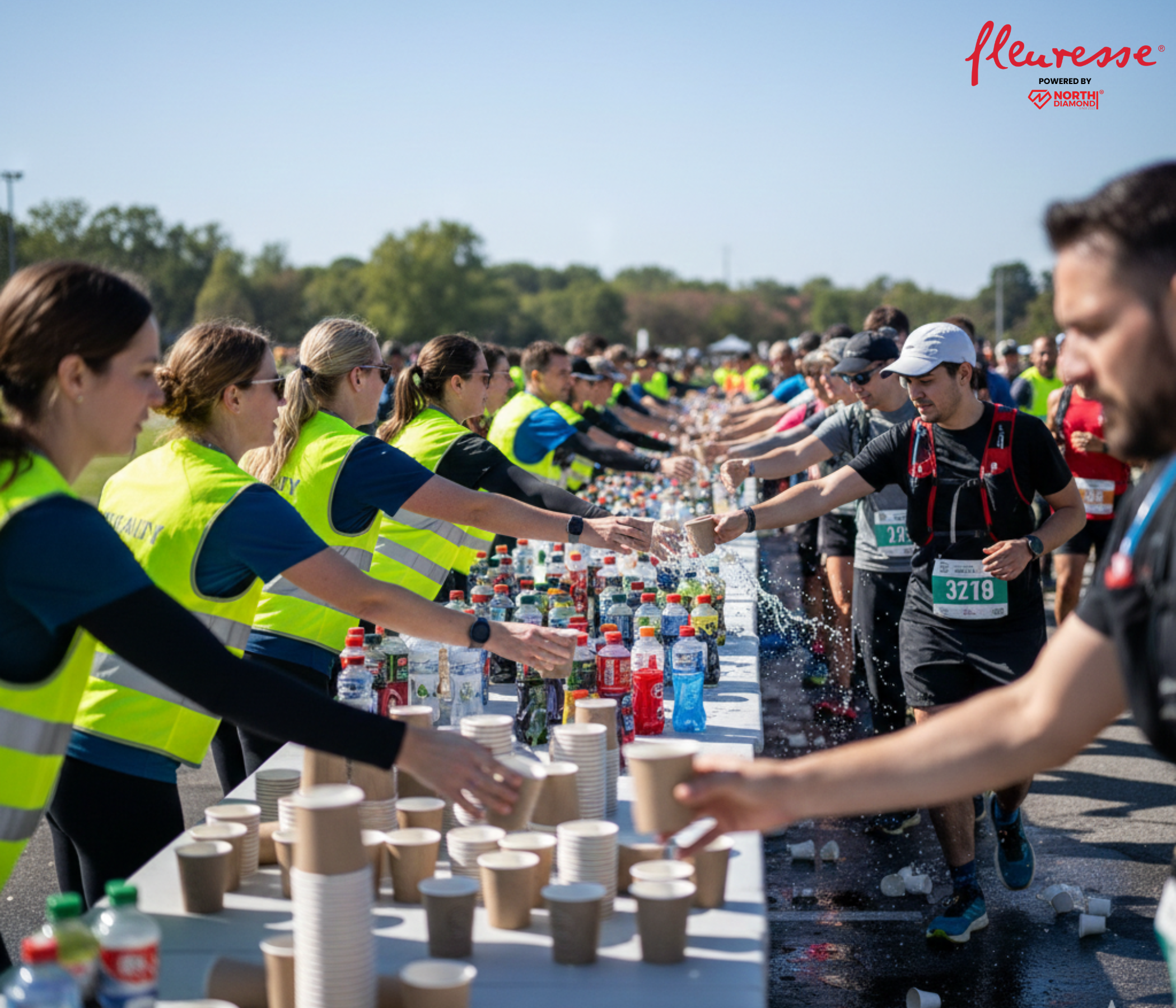
What to consume depends on what your stomach tolerates. Energy gels are concentrated and convenient but can cause gastric distress if you haven’t practiced with them. Sports drinks at aid stations provide both carbohydrates and electrolytes but deliver less concentrated energy. Some runners prefer real food—small pieces of banana, energy chews, even gummy bears work if you’ve trained your gut to process them while running.
The key word is “trained.” Sarah’s mistake wasn’t just skipping race-day fuel—it was never practicing fueling during training runs. Your digestive system needs training as much as your legs do. What works perfectly while standing still might cause problems at race pace. Use your long training runs to experiment with different fueling options, timing, and amounts.
The Water Station Balance
Philippine races mean dealing with heat and humidity that accelerate dehydration. But there’s a balance between staying hydrated and over-drinking. Take small amounts at each water station rather than chugging entire cups. If you’re taking gels, always consume water with them to aid digestion and prevent stomach issues.
Watch for dehydration signs: excessive thirst, dark urine after the race, dizziness, or unusually high heart rate. But also watch for over-hydration, which dilutes blood sodium and can be dangerous. For most half-marathon runners in Philippine conditions, drinking at every aid station while consuming electrolyte-containing fuel or sports drinks provides adequate hydration and sodium replacement.
The Recovery Connection
What many runners miss is that race-day performance isn’t just about what you eat during the race—it’s about how well-rested your body is arriving at the starting line. Months of training mean months of accumulated stress on your body. The runners who perform best aren’t necessarily those who train hardest, but those who recovered most effectively between training sessions.
At North Diamond Epsilon, we work with endurance athletes who understand this deeply. Your bedroom is your primary recovery space. Premium Fleuresse bed linens designed with breathable natural fabrics aren’t luxury—they’re recovery equipment. In Philippine heat, sleeping on materials that regulate temperature and wick moisture means achieving the deep sleep cycles where your body repairs muscle damage, restores energy systems, and prepares for the next training session.
Quality sleep directly impacts your body’s ability to store glycogen. Poor sleep reduces glycogen synthesis, meaning even if you eat all the right foods, your body can’t store fuel efficiently. The runner sleeping on uncomfortable, heat-trapping synthetic sheets is undermining their own race preparation, creating a recovery deficit they’re trying to overcome with nutrition alone.
Our bamboo charcoal air purifiers support respiratory health and sleep quality. Runners logging high mileage in Manila’s air need every advantage for lung health and recovery. Clean air while sleeping means better oxygen exchange, deeper rest, and more effective recovery between hard training sessions.
Race Week Strategy
The week before your half-marathon, your sleep quality becomes even more critical. This is taper week, when training volume decreases but race-day nerves might disrupt sleep. Create a consistent sleep schedule, maintain your pre-race sleep environment, and prioritize rest over last-minute training anxiety.
At North Diamond Epsilon, we encourage athletes to prepare their sleep environment as carefully as they prepare their race-day gear. Fresh, comfortable bed linens for taper week. Clean air from well-maintained purifiers. Consistent temperature and minimal disruption. Your body is storing energy, repairing tissue, and preparing for race-day demands—give it the environment it needs to do that work effectively.
Sarah’s Second Attempt
Six months later, Sarah lines up for another half-marathon, this time prepared. She practiced fueling during every long training run. She knows exactly what her stomach tolerates and when she needs it. She slept well the three nights before the race on comfortable bedding in a room with clean air, arriving rested rather than anxious and sleep deprived.
At kilometer eight, she takes her first gel with water, exactly as planned. At twelve kilometers, she takes another. She feels strong through fifteen, where she hit the wall last time. At eighteen kilometers, she’s tired but steady, her fueling strategy working exactly as she trained it to.
She crosses the finish line ten minutes faster than her first attempt, but more importantly, she feels strong through the entire race. Her success came from understanding that half-marathon performance requires more than just logging training miles—it requires strategic fueling, practiced execution, and showing up rested enough to use the fuel her body has stored.
The Complete Performance Picture
Fueling for a half-marathon isn’t just about what you eat before and during the race. It’s about arriving at the starting line with a body that’s been properly recovering for months, storing glycogen efficiently because sleep quality has been optimized, and ready to perform because every aspect of preparation—nutrition, hydration, rest, and training—has been addressed.
Race day reveals the quality of your preparation. Feed yourself strategically. Train your gut alongside your legs. And rest in an environment that supports the recovery your training demands.
Support your training with sleep environments designed for athletic recovery. Explore our collection at northdiamondepsilon.com.ph