
 Marco has been training for months for his first full marathon. He’s logged miles, perfected his pace, invested in proper running shoes. But three days before race day, he realizes he has no idea what to eat. His runner friends all have different opinions—carb load heavily, eat light, avoid dairy, embrace pasta. The confusion is almost as stressful as the race itself.
Here’s what experienced runners know: race-day performance isn’t just built on training. It’s built on strategic fueling, quality sleep, and ensuring your body arrives at the starting line properly nourished, rested, and ready to perform.
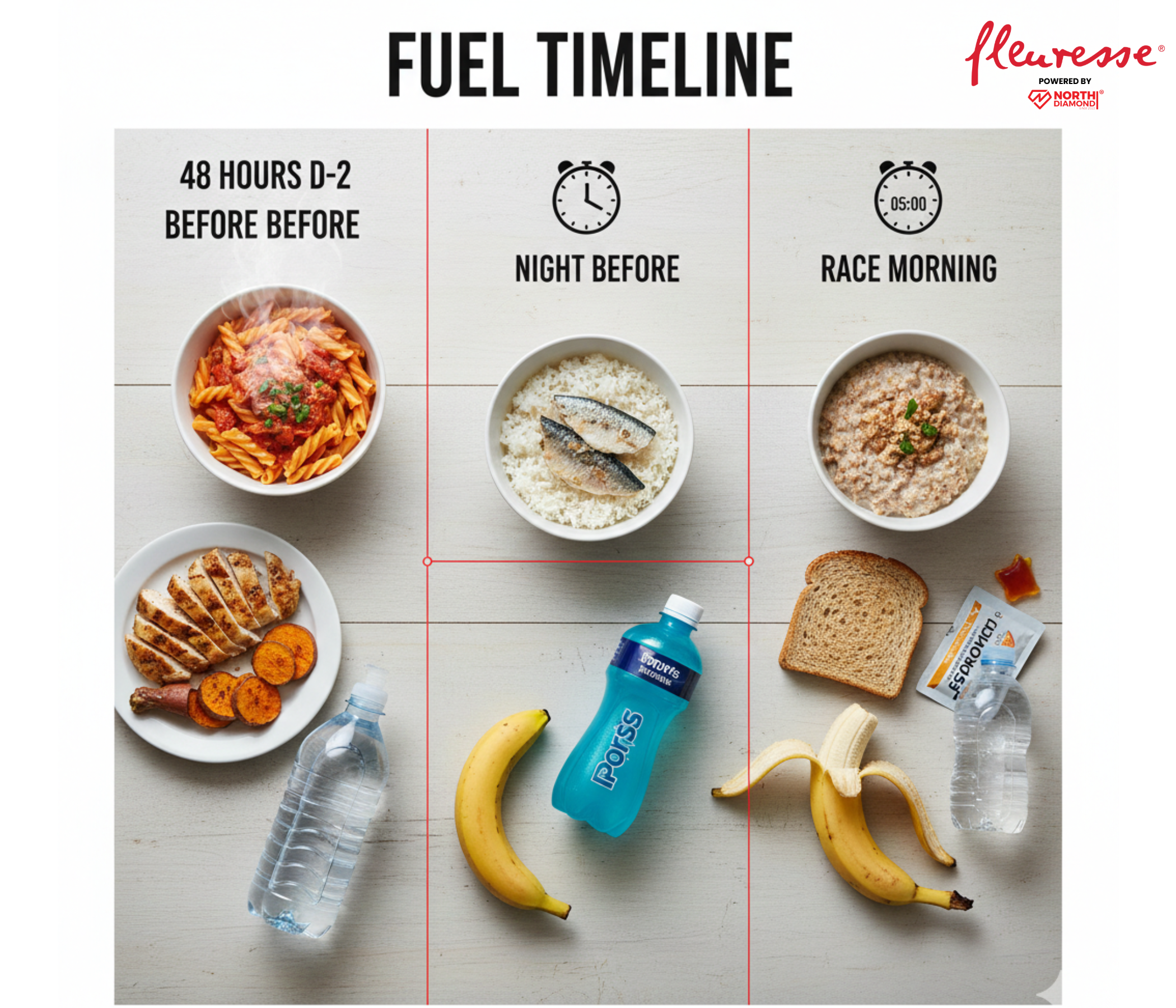
The 48-Hour Window: Building Your Foundation
Two days before race day, your fueling strategy begins. This isn’t the time for drastic changes or experiments. Your body needs familiar, easily digestible carbohydrates that will stock your glycogen stores without causing digestive distress.
Focus on complex carbohydrates—rice, pasta, bread, oatmeal—paired with moderate protein and minimal fiber and fat. Filipino runners have an advantage here: rice-based meals are our default, and white rice is ideal for pre-race fueling. Chicken adobo with rice, pancit, even simple fried rice with eggs provides the combination of carbs and protein your body needs.
Hydration starts now too. Not chugging water excessively, but consistent intake throughout the day. Your urine should be pale yellow, not clear or dark. Include electrolytes if you’re training in Philippine heat—coconut water works perfectly and tastes better than most sports drinks.
The key during this 48-hour window is normal. Eat slightly more carbohydrates than usual, but don’t suddenly triple your portions or try new foods. Your digestive system needs to function smoothly, not struggle with unfamiliar meals or excessive volume.
The Night Before: Strategic Simplicity
Race-day eve brings its own challenges. Nerves might affect appetite. The temptation to carb-load heavily can lead to feeling uncomfortably full. Restaurant meals with friends might introduce foods your stomach isn’t used to processing.
The night before your race, eat a familiar, moderate dinner three to four hours before bed. For most Filipino runners, this might be chicken with rice and light vegetables, or a simple pasta dish you’ve eaten many times before. Avoid high-fat foods, excessive fiber, or anything spicy that might cause overnight digestive issues.
Hydration continues but taper off two hours before sleep so you’re not waking up repeatedly for bathroom trips. Your last pre-race night should prioritize sleep quality as much as nutritional preparation.
The Sleep Equation
Here’s what runners often overlook: the night before a race might be your worst sleep of the week due to nerves, early wake-up anxiety, and mental preparation. This makes the sleep you get two and three nights before the race even more critical.
At North Diamond Epsilon, we work with serious athletes who understand that training includes sleep optimization. Premium Fleuresse bed linens aren’t just comfort—they’re performance equipment. When you’re sleeping on breathable, temperature-regulating natural fabrics, your body achieves deeper, more restorative sleep cycles. In Philippine heat and humidity, this makes the difference between waking up rested versus tossing uncomfortably all night.
Proper air quality matters too. Our bamboo charcoal air purifiers ensure you’re breathing clean air while sleeping, which directly impacts sleep quality and recovery. Athletes training hard need every advantage in recovery, and sleep environment is one variable completely within your control.
Marco learned this the hard way during training. After particularly long runs, he slept poorly on his old synthetic sheets, waking up overheated and unrested. Upgrading his sleep environment improved his recovery between training sessions and helped him arrive at taper week rested rather than accumulated-fatigue exhausted.
Race Morning: The Final Fuel
Wake up three to four hours before race starts if possible. This gives your body time to digest, process, and convert food to usable energy. Your race morning meal should be almost boring in its familiarity—something you’ve eaten before every long training run, something you know your stomach tolerates.
For many runners, this is a simple carbohydrate with minimal protein and fat. White bread with jam or honey. Banana with a small amount of peanut butter. Oatmeal with a drizzle of brown sugar. Rice porridge. The goal is easily digestible fuel that won’t cause digestive issues mid-race.
Coffee is fine if you normally drink it—race day isn’t when you quit caffeine and face withdrawal headaches. But don’t suddenly consume twice your normal amount thinking it will enhance performance. Stick with what your body knows.
Continue sipping water and electrolytes but stop drinking heavily ninety minutes before race starts. You want to be hydrated, not desperately needing a porta-potty at five kilometers.
The Taper Week Sleep Strategy
During taper week, when your training volume decreases, your sleep should increase if possible. Your body is finally getting the recovery time it needs to repair months of training stress. Extra sleep during taper isn’t lazy—it’s strategic. This is when your muscles rebuild stronger, your energy systems fully restore, and your body prepares for race-day demands.
This is where sleep environment becomes crucial. At North Diamond Epsilon, we encourage athletes to view their bedroom as their primary recovery space. Quality bed linens that keep you comfortable through the night, air purifiers that support respiratory health and sleep quality—these aren’t extras, they’re part of your training infrastructure.
Athletes spend thousands on coaches, gear, and race fees. Investing a fraction of that in sleep quality delivers returns across every aspect of training and performance. When you’re sleeping on premium natural fabrics designed for tropical conditions, you recover better between training sessions and arrive at race day genuinely rested rather than chronically sleep-deprived.
Race Day Confidence
Marco stands at the starting line, nervous but prepared. He ate familiar foods at the right times. He slept as well as possible given pre-race jitters, but more importantly, he prioritized sleep quality during the crucial 48 to 72 hours before, when his body was still processing training stress and preparing for race demands.
His stomach feels settled, not bloated or empty. His energy feels steady, not jittery or depleted. He trusts his fueling plan because he practiced it during long training runs. And he trusts that his body is rested because he invested not just in training, but in the recovery environment that makes training adaptable.
The gun goes off. His preparation—both nutritional and sleep-related—becomes the foundation that carries him through kilometers of effort. This is what proper race preparation looks like: strategic fueling, quality rest, and understanding that performance is built on accumulated good decisions, not just race-day choices.
Beyond the Race
The fueling blueprint that works for race day works for life. Strategic nutrition, adequate hydration, quality sleep—these aren’t just athletic performance tools, they’re human performance tools. Whether you’re running a marathon or navigating a demanding week at work, your body needs the same foundational support.
At North Diamond Epsilon, we support athletes because we understand that serious performers in any field recognize the value of optimizing recovery. Your bedroom isn’t just where you sleep—it’s where your body rebuilds, repairs, and prepares for tomorrow’s needs.
Race day is just one day. The quality of your daily sleep affects every day. Invest accordingly.
Optimize your recovery with sleep environments designed for performance. Explore our collection at northdiamondepsilon.com.ph